
The US Federal Reserve late on Tuesday slashed its lending rate from 1 per cent to zero to 0.25 per cent.
Sania Mirza will lead the four-member Indian side in the upcoming Asia/Oceania Group I tie of the Fed Cup tennis tournament.

The central bank maintained its bias towards a rate hike.

Fed is still concerned about weak export growth.
The central bank also left the benchmark rates unchanged in the range of 0 to 0.25 per cent. The Federal Open Market Committee which decides on the key rates has retained the same near zero and said economic conditions warrant 'exceptionally low levels' of federal fundsfor a longer period.

The Reserve Bank of India on Friday revised upwards the GDP growth projection for the current fiscal to 7.2 per cent from 7 per cent on rising private consumption and revival of demand in rural areas. Unveiling the bi-monthly monetary policy, RBI Governor Shaktikanta Das said estimates released by the National Statistical Office (NSO) placed India's real gross domestic product (GDP) growth at 8.2 per cent in 2023-24. "During 2024-25 so far, domestic economic activity has maintained resilience," he said, adding that manufacturing activity continues to gain ground on the back of strengthening domestic demand.
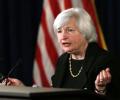
The Fed made clear that the rate hike was a tentative beginning to a "gradual" tightening cycle

An expected withdrawal of FIIs from the market likely to weaken the rupee against the dollar.
The US Federal Reserve rate cut on Wednesday, the 13th after May 16, 2000 may prove to be a boon to Indian depositary receipts.
Fed seen holding rates steady as investor confidence shakes

Yellen is currently Vice Chairman of the Board of Governors of the Federal Reserve System.

'India's sizeable forex reserves should help stem a possible fall in our currency.'

The move, which could come as a surprise to many investors, was a nod to better prospects for economy and labor market
Three major central banks have hit the zero limit, the Fed, the European Central Bank and the Bank of Japan.
Federal Reserve chairman Ben Bernanke touched off the biggest one-day rally in US stocks this month by hinting that the Central Bank is almost done with raising interest rates. The indices had their biggest rise since June 29.
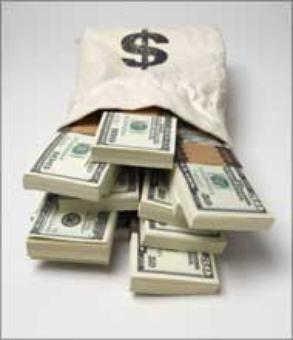
The US Federal Reserve has earned a whopping $14 billion profit on loan programmes made in the last two years, says a media report.

Fundraising activity in the debt market is gaining momentum ahead of the festival season. Several non-banking financial companies (NBFCs) and the National Bank for Agriculture and Rural Development (Nabard) are planning to raise at least Rs 5,560 crore in the next two days by issuing bonds, with a greenshoe size of Rs 6,370 crore. Ajay Malglunia, managing director and head of investment grade group at JM Financial, said, "The market likes certainty, the market will gain clarity after the US Federal Reserve's (Fed's) policy.

The nomination would put Yellen on course to be the first woman to lead the institution.
India has not been able to compete with countries such as Bangladesh and Vietnam.

The world's largest economy, which is witnessing slow expansion, is also grappling with high unemployment levels. "Reports from the 12 Federal Reserve districts suggest that economic activity continued to expand moderately from November through December," Fed's latest Beige Book said.

Foreign portfolio investors (FPIs) sold shares worth Rs 20,170 crore ($2.4 billion) recently. This marked the fifth-highest weekly outflow from overseas funds since the beginning of 2008 and the largest since the last week of March 2020. Due to the Covid scare, FPIs had sold shares worth Rs 21,951 crore during that week, causing the market to decline by nearly 20 per cent.
Crucially, the US central bank softened the blow by making its forward guidance even more dovish.

Yes Bank was the biggest gainer in the Sensex pack, soaring 6.04 per cent, followed by IndusInd Bank, Tata Steel, HeroMotoCorp, Sun Pharma, Bajaj Auto, Power Grid, Tata Motors, SBI and Kotak Bank that gained up to 5.32 per cent.

Strong currency and sagging oil prices are spooking policymakers.
With US Fed increasing interest rates to 3%, equity money flows into emerging markets like India could be impacted in the medium term.
The surge is a stark turnaround from 2013 when the country's current account gap hit a record high due to outflows on expectations the US Fed would rein in its stimulus programme

India's top singles player Sumit Nagal on Friday returned to the Davis Cup team for the World Group I tie against Sweden but Yuki Bhambri has opted out of the September 14-15 contest,
Global fund managers remain bullish on the Japanese stock markets, which is now their most preferred destination in the Asian region. Both Morgan Stanley and Jefferies in their recent reports, have cited their preference for the Land Of The Rising Sun, which is fast becoming the land of the rising equities, too.

This was the weakest endorsement ever extended to a chairman in the central bank's 96-year history.

Weaker-than-expected growth in US jobs in recent months had already forced US central bankers to put off a rate hike at their meeting last week
The world economy has been run for too long by finance enthusiasts. It is time that finance sceptics began to take over.

After an extremely stable 2023, the Indian rupee started 2024 on a promising note and has turned out to be the best-performing Asian currency so far in January, appreciating 0.1 per cent despite 2 per cent rise in the dollar index. All other Asian currencies depreciated by around 1.4-4 per cent during the month. The local currency regained its ground against the greenback on the back of foreign portfolio inflows, said market participants.

Equity benchmark Sensex surged past the 57,000-mark by rallying over 1,000 points on Thursday, tracking an overall bullish trend in global equities despite the US Federal Reserve hiking rates. The 30-share BSE index closed 1,047.28 points or 1.84 per cent higher at 57,863.93. Likewise, the NSE Nifty surged 311.70 points or 1.84 per cent to end at 17,287.05.

A gradual increase works best for the US, as well as global markets, says Nizam Idris managing director, head of strategy (fixed income and currencies), Macquarie Bank.

Gold is up 0.8 per cent for the week, after hitting a near-two-week high earlier in the week.

In the United States, economic data is likely to take a back seat next week.

What is digital house arrest? It is a tactic cybercriminals use to confine victims to their homes and scam them, explains Tamal Bandyopadhyay.
